What Product Testing Can Reveal About Bakery Packaging Challenges
One of the most valuable stages of any packaging project is testing. While a carton may perform exactly as designed, testing can reveal challenges that originate from the product itself or the conditions it experiences during distribution.
Identifying those challenges early allows bakeries and packaging suppliers to work together toward practical solutions before a program reaches full production.
Many bakery packaging challenges do not appear on the production floor. They become visible only after products have been packed, transported, stored, and handled throughout the distribution process.
Why Bakery Packaging Challenges Often Appear After Testing
Bakery products are unique because they continue to interact with their packaging long after they leave the bakery.
Heat, moisture, grease migration, transportation conditions, and time spent in the package can all influence packaging performance. A carton that appears to function perfectly during packing may experience very different conditions once it enters a wholesale or distributor network.
This is why real world testing is such an important part of evaluating bakery packaging challenges. Testing helps identify factors that may not be obvious during initial package development.
In many cases, the packaging itself is not the problem. Instead, testing reveals how the product behaves throughout the distribution cycle.
Looking Beyond the Carton
When bakery packaging challenges are identified, the first reaction is often to add another layer of protection.
For example, some bakery operations place products inside plastic bags before loading them into a paperboard carton. While this approach can help address certain concerns, it also introduces additional material costs, labor requirements, and handling steps.
Sometimes the most effective solution is not adding another step. It is evaluating whether the package itself can be modified to better support the application.
Depending on the product and distribution requirements, solutions such as poly coated paperboard or cellophane window designs may provide alternative approaches worth exploring.
The correct answer depends on the specific product, packaging environment, and operational goals of the bakery.
Packaging Is Part of the Process
One of the most common mistakes in packaging development is viewing the carton as a standalone component.
In reality, packaging is part of a larger process that includes production, packing, transportation, storage, handling, and final presentation.
When evaluating bakery packaging challenges, it is important to ask questions such as:
• How long will the product remain in the package?
• What conditions will it experience during transportation?
• Is grease migration a concern?
• Are there opportunities to reduce handling steps?
• Can packaging modifications improve operational efficiency?
By looking at the entire process, bakeries can often identify opportunities to improve both packaging performance and operational effectiveness.
The Importance of Collaboration
Packaging development is rarely a one time transaction.
Successful packaging programs are built through communication, testing, evaluation, and continuous improvement. Challenges uncovered during testing should not be viewed as setbacks. They should be viewed as opportunities to improve the final solution before full scale implementation.
The strongest packaging partnerships are built when suppliers and customers work together to evaluate results, discuss alternatives, and identify practical solutions.
Solving Bakery Packaging Challenges Together
The reality is that bakery packaging challenges are not always predictable. Product characteristics, distribution conditions, moisture, grease migration, and other factors may only become visible during testing.
What matters most is how those challenges are addressed.
At New York Folding Box, we believe packaging development is a collaborative process. When a customer encounters a challenge, our goal is to evaluate the situation, discuss practical alternatives, and work toward a solution that supports both product performance and operational efficiency.
A successful packaging program is not measured by whether questions arise during development. It is measured by how effectively those questions are resolved.
For more than 100 years, New York Folding Box has worked with customers to develop practical paperboard packaging solutions that support long term success.
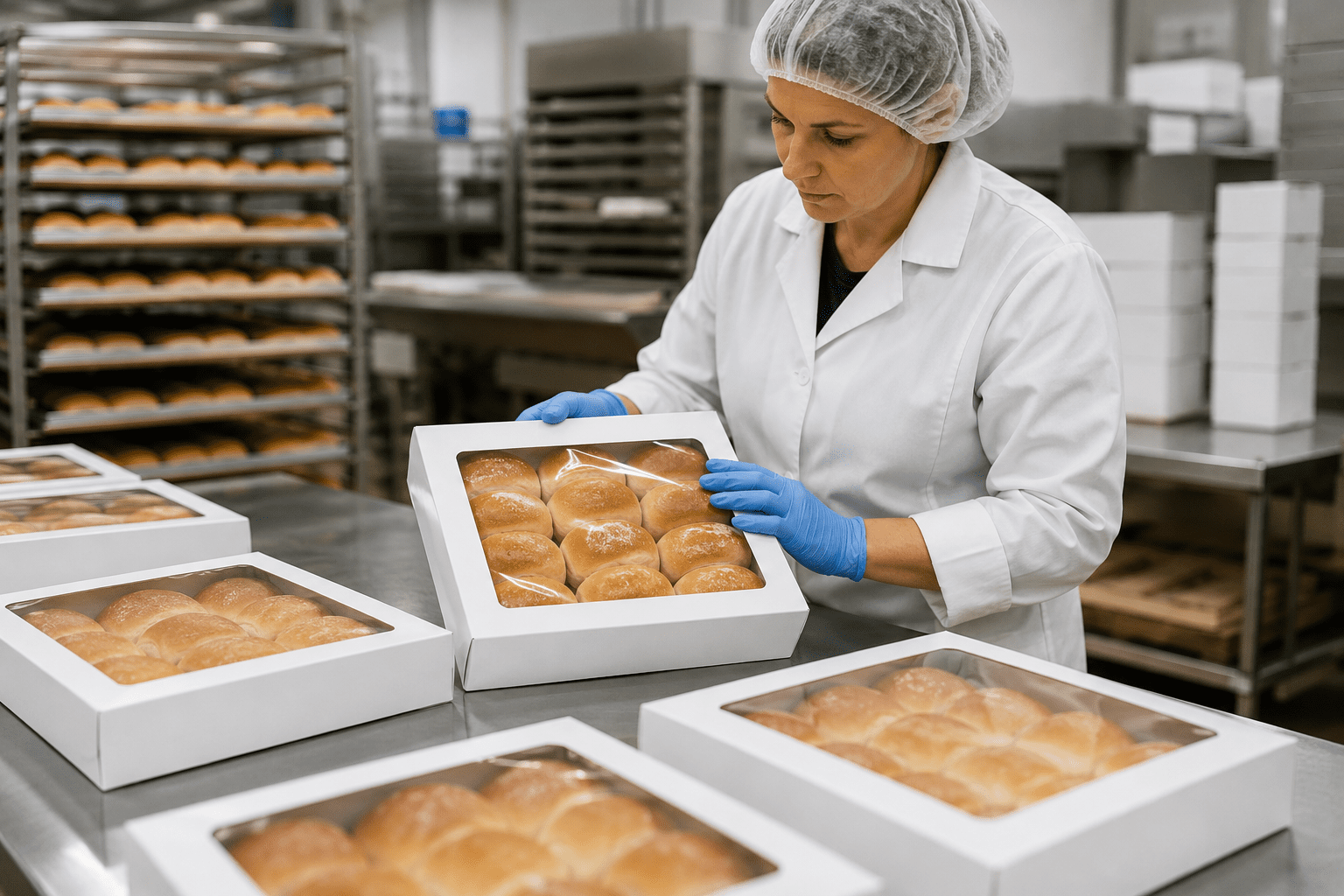
Product testing helps identify bakery packaging challenges before products move through distribution networks.