Packaging Strategy in Distribution Is No Longer a Background Decision
For years, packaging in distribution was treated as a necessary input rather than a strategic lever.
That mindset is shifting on the Packaging Strategy Distribution.
As operational margins tighten across foodservice and grocery distribution, packaging strategy in distribution is being evaluated alongside labor efficiency, freight optimization, and inventory velocity. The question is no longer simply whether the carton works. It is how it influences the system.
Packaging Influences the Entire Operation
Packaging decisions affect more than presentation. They directly impact:
Warehouse cube utilization
Pick and pack speed
Freight density and load efficiency
Inventory turns
Forecast stability
Supplier reliability
When systems are under pressure, small inefficiencies compound quickly. A case configuration that wastes space or a carton that slows picking speed may not appear significant individually, but across volume programs the impact becomes measurable.
Packaging moves from background to foreground when performance is quantified.
Standardization Protects Margin
Distributors increasingly favor packaging formats that perform consistently across multiple customers and applications.
Standardization reduces variability, and reduced variability produces:
Cleaner demand forecasting
Faster replenishment cycles
Lower risk of obsolete inventory
Simplified purchasing decisions
Paperboard folding cartons often remain central to this strategy because they balance structural reliability with repeatability. Predictable inputs produce predictable outputs.
Reliability Outperforms Novelty
Inconsistent lead times, material substitutions, or quality variation introduce downstream instability.
Operational teams now evaluate packaging partners based on:
Manufacturing continuity
Material consistency
Lead time stability
Process discipline
In distribution, repeatability is more valuable than novelty. Programs scale when inputs remain stable.
Sustainability Must Align With Operations
Environmental expectations remain part of procurement discussions. However, implementation has matured.
Sustainability initiatives that introduce operational friction rarely survive scaling.
Recycled paperboard aligns well with distribution requirements because it supports environmental objectives while maintaining structural performance and supply consistency.
Operational alignment determines long-term adoption in Packaging Strategy Distribution
Why Packaging Strategy in Distribution Is Getting More Attention
Packaging strategy in distribution has always mattered. What has changed is measurement.
Freight is analyzed. Labor is measured. Inventory velocity is tracked. As those systems become more disciplined, packaging performance becomes easier to quantify.
When operational pressure increases, reliable components become strategic assets.
In distribution, packaging is one of those components.
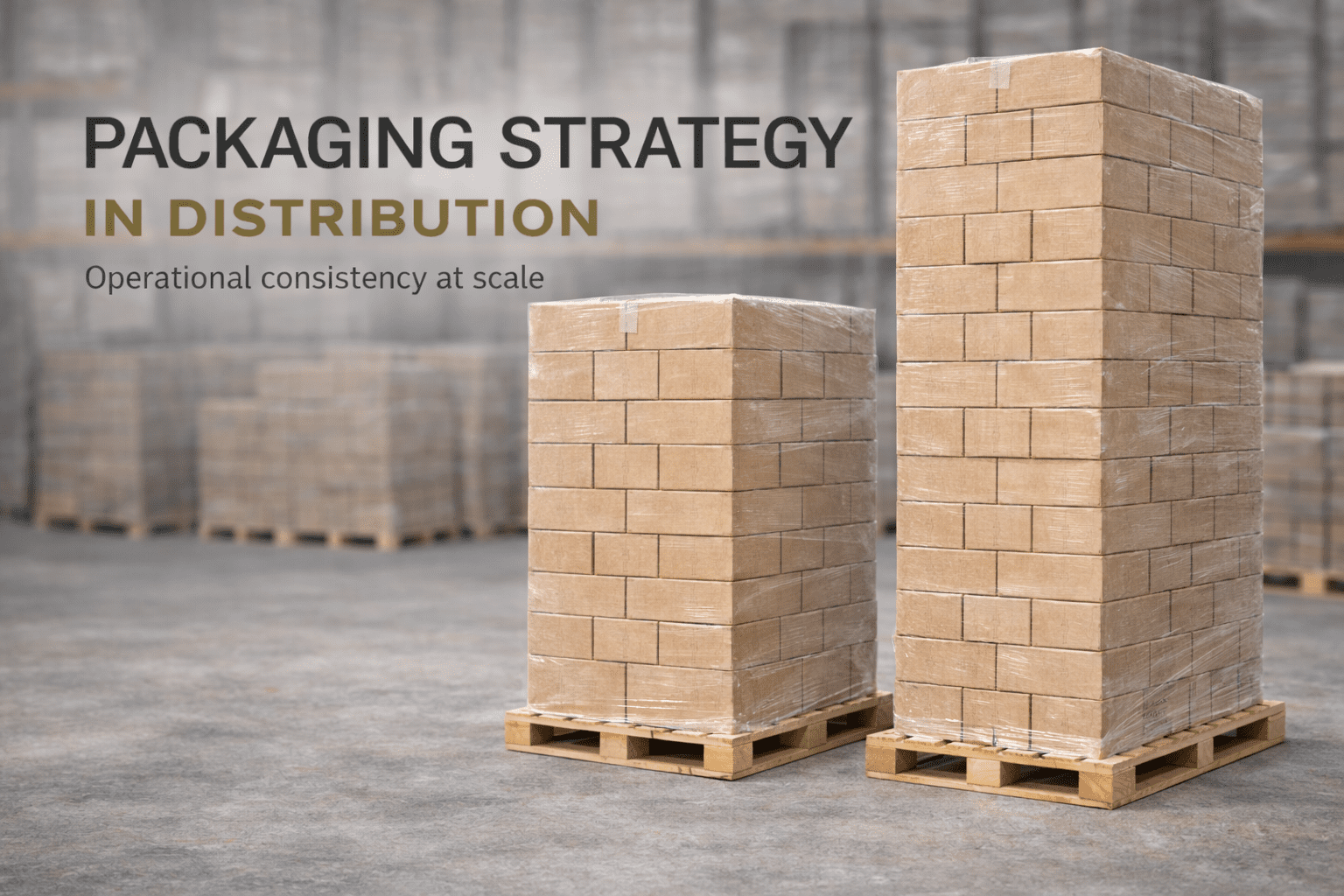 Packaging Strategy Distribution