Procurement

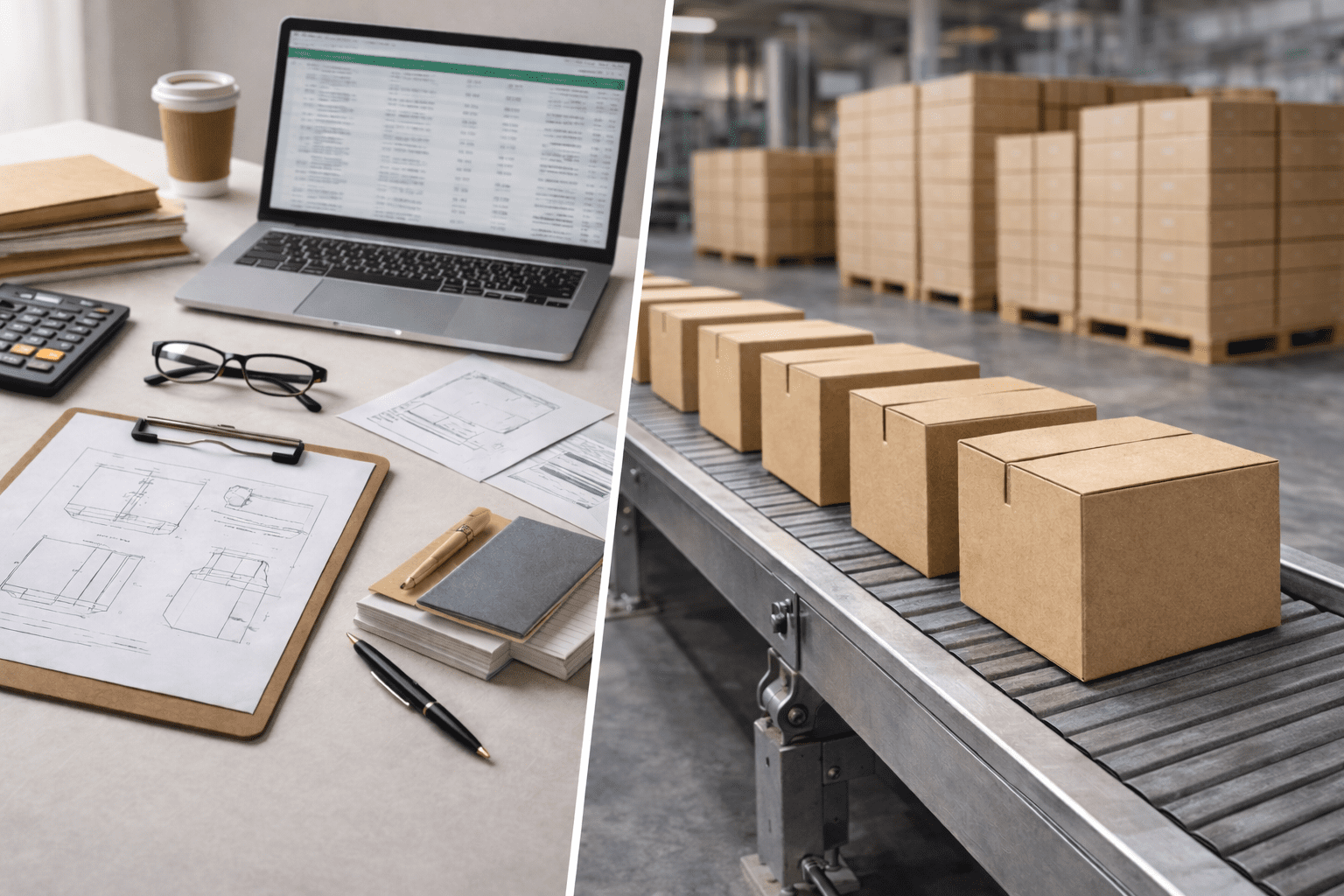
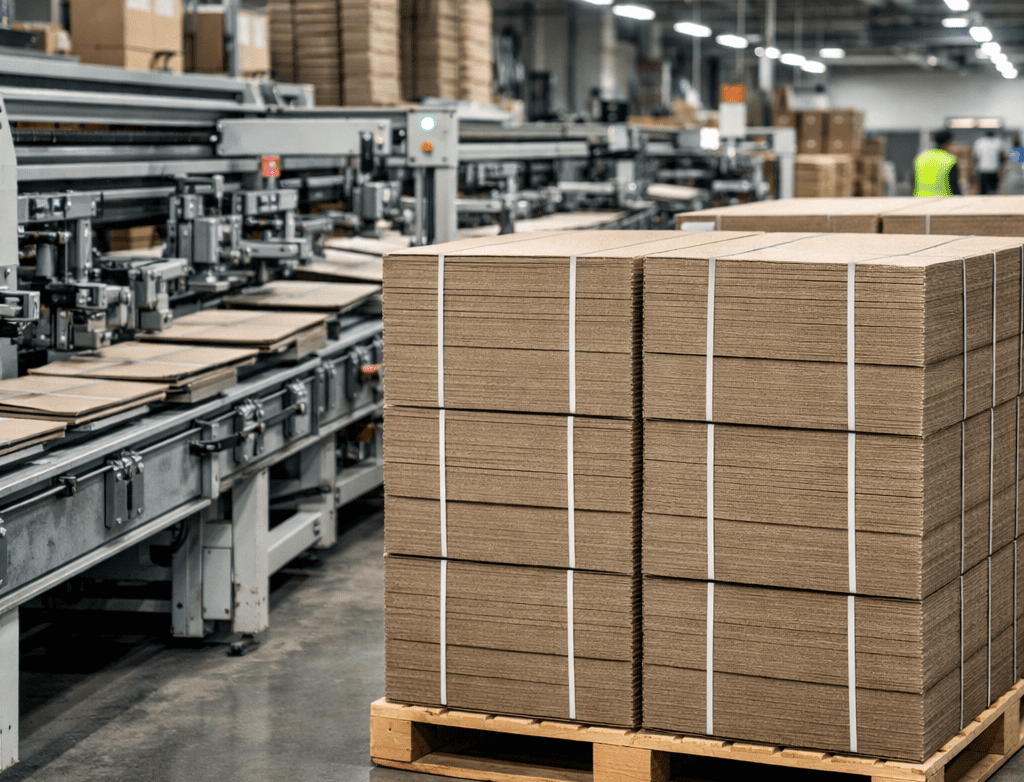
packaging supplier reliability shown through consistent recycled chipboard cartons stacked on pallets and running smoothly through a folding carton production line

Why Packaging Suppliers Quietly Become Operational Risks

Why Packaging Suppliers Quietly Become Operational Risks 1024 1024 NY Folding Box Company

Why Packaging Suppliers Quietly Become Operational Risks

Most packaging decisions are made around price, specs, and lead times.

What gets missed is the supplier behind it. That is where packaging supplier reliability becomes a real operational factor.

Because when a packaging supplier is inconsistent, everything downstream feels it.

Packaging Does Not Fail All At Once

Failures in packaging rarely show up as a single obvious issue.

They show up as small disruptions:

  • Orders arriving slightly off schedule
  • Board quality changing between runs
  • Cartons not folding as cleanly as the last batch
  • Increased waste on the line

Together, they create instability, especially when packaging consistency in production starts to break down.

Inconsistency Is the Real Cost

Unit price is easy to compare.

Consistency is not.

When packaging supplier reliability is weak, the hidden costs begin to build:

  • Extra labor adjusting for variation
  • Slower production speeds
  • Higher reject rates
  • More time spent troubleshooting

This is where packaging supplier reliability separates stable operations from constant adjustment.

None of this appears on a quote, but it shows up immediately on the floor.

Procurement Often Optimizes the Wrong Variable

It is common to focus on reducing cost per unit.

But in packaging, the more important variable is predictability.

A slightly higher cost from a stable supplier often results in lower total cost across the operation.

This is why packaging supplier reliability should be evaluated alongside price, not after it.

What Packaging Supplier Reliability Actually Looks Like

Reliable suppliers do not just deliver boxes.

They deliver repeatable performance.

This includes:

  • Consistent board sourcing
  • Stable converting processes
  • Uniform die cutting and scoring
  • Predictable lead times

When packaging supplier reliability is strong, packaging disappears into the process.

That is the goal.

Where Problems Usually Start

Most supplier issues are not caused by one major failure.

They come from a lack of control in small areas:

  • Switching board sources without notice
  • Loose process control on press or die cutting
  • Overextending capacity
  • Prioritizing volume over consistency

These decisions weaken packaging supplier reliability and create variability that compounds over time.

Why This Matters More in Distribution

Distributors operate on tight margins and high volume.

They rely on packaging that performs the same way every time.

When it does not, the impact spreads quickly across customers, inventory, and service levels.

This is why packaging strategy in distribution cannot ignore packaging supplier reliability.

Packaging Is a System, Not a Product

It is easy to think of packaging as a simple item.

In reality, it is part of a larger system that includes production, logistics, and customer delivery.

When one part becomes unstable, the system adjusts around it.

That adjustment is where cost and friction appear.

Packaging supplier reliability determines whether that system runs smoothly or constantly needs correction.

New York Folding Box has been focused on repeatable, controlled paperboard production since 1918.

Because in packaging, consistency is what keeps everything moving.
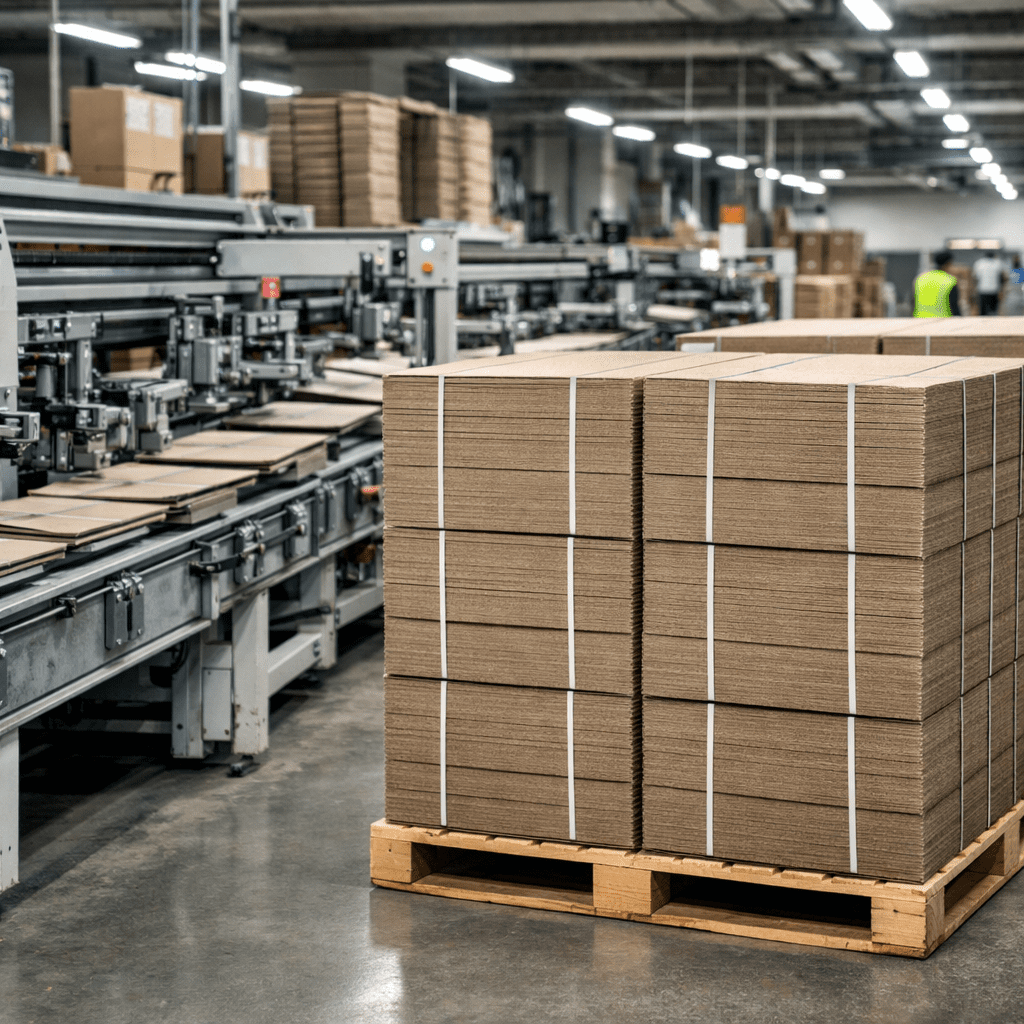
packaging supplier reliability shown through consistent recycled chipboard cartons stacked on pallets and running smoothly through a folding carton production line

Consistent packaging performance starts with stable materials and controlled production.
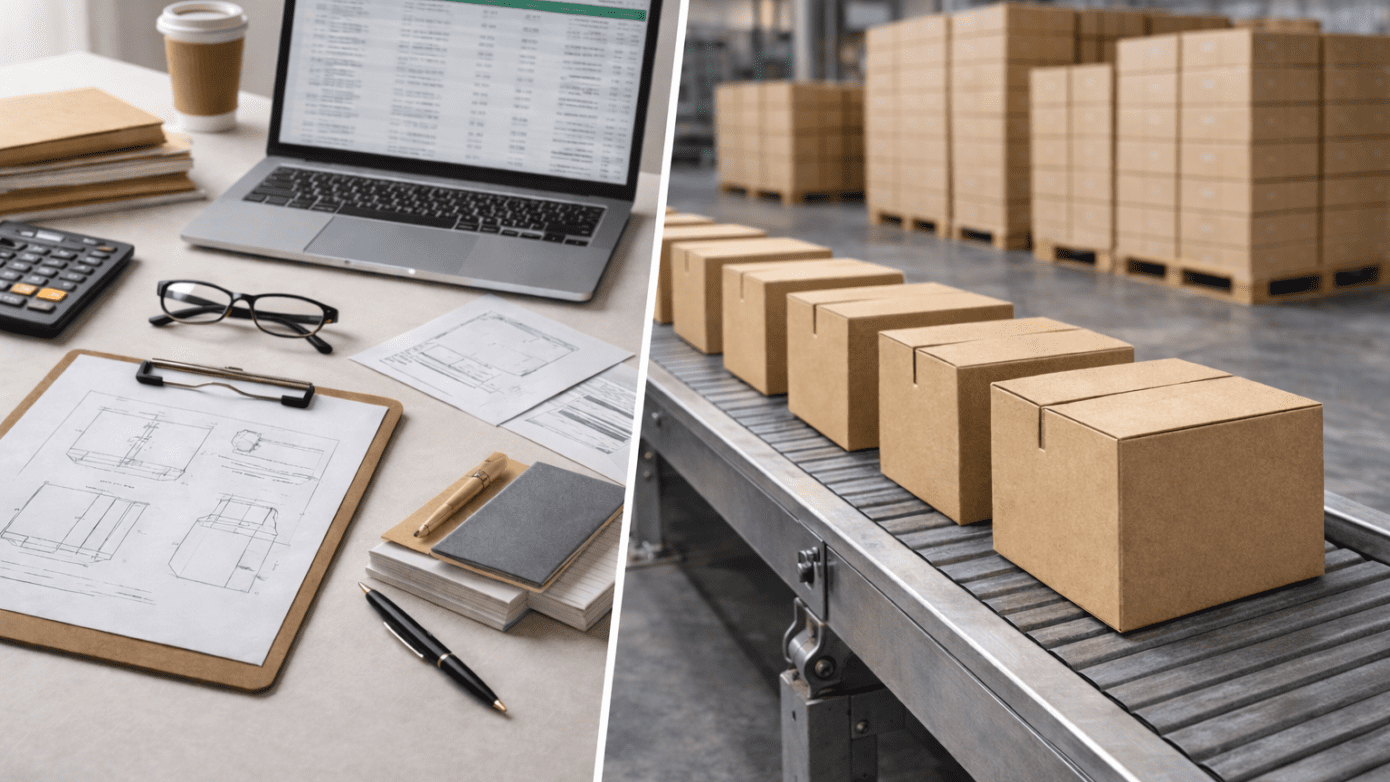
Packaging procurement mistakes illustrated by contrast between procurement planning and perfectly aligned recycled chipboard carton production

Common Packaging Mistakes Procurement Teams Make

Common Packaging Mistakes Procurement Teams Make 1536 1024 NY Folding Box Company

Most packaging procurement mistakes do not start on the production floor.

They start in procurement.

The decisions made at the sourcing stage often determine whether a packaging program runs smoothly or creates ongoing problems.

These packaging procurement mistakes are rarely intentional.

But they are common.

And they tend to show up later, when they are harder to fix.

Why Packaging Procurement Mistakes Create Downstream Issues

Procurement decisions do not stay contained at the purchasing level.

They directly impact:

  • production efficiency
  • warehouse handling
  • product consistency
  • overall operational flow

When packaging procurement mistakes occur, the effects move through the entire system.

Mistake 1: Prioritizing Unit Cost Over Total Cost

One of the most common packaging procurement mistakes is focusing only on price per thousand.

Lower-cost packaging can introduce hidden costs across the operation:

  • inconsistent performance
  • higher damage rates
  • additional handling time
  • increased waste

Procurement is not just buying packaging.

It is influencing how efficiently that packaging moves through the system.

Mistake 2: Over-Specifying the Packaging

Another frequent packaging procurement mistake is adding unnecessary requirements.

This often shows up as:

  • unnecessary print complexity
  • tighter tolerances than required
  • materials that exceed the actual use case

Over-specification reduces flexibility and increases the risk of production issues.

In many cases, simpler specifications lead to more stable outcomes.

Mistake 3: Treating Every Order as a Custom Job

Treating every order as custom is a costly packaging procurement mistake.

Custom packaging has a place.

But applying a custom approach to high-volume, repeatable items introduces unnecessary variability.

Standardized packaging programs reduce:

  • lead time variability
  • production complexity
  • ordering friction

Not every item needs to be reinvented.

Mistake 4: Ignoring Production Reality

A critical packaging procurement mistake is disconnecting sourcing decisions from production reality.

Small details can create major issues:

  • board selection that does not convert well
  • designs that do not fold consistently
  • print layouts that require constant adjustment

When procurement decisions are disconnected from production, problems are delayed, not avoided.

Mistake 5: Evaluating Suppliers on Capability Instead of Consistency

Many packaging procurement mistakes come from evaluating suppliers incorrectly.

Many suppliers can produce a sample that looks correct.

Fewer can produce the same result across every run.

Consistency shows up in:

  • repeatable dimensions
  • stable lead times
  • predictable material performance

Packaging programs rely on consistency more than capability.

Mistake 6: Expanding SKUs Without Operational Justification

Expanding SKUs unnecessarily is another packaging procurement mistake that creates long-term complexity.

Each additional SKU requires:

  • storage space
  • tracking
  • forecasting
  • handling

Over time, this reduces efficiency and increases the likelihood of errors.

Simplification is often the more effective strategy.

Final Thought

Packaging procurement mistakes are not always obvious at the time they are made.

But they tend to surface later, under pressure.

The best outcomes come from aligning cost, production reality, and operational efficiency from the start.

When those are in sync, packaging becomes one less variable to manage.

Packaging procurement mistakes illustrated by contrast between procurement planning and perfectly aligned recycled chipboard carton production

Procurement decisions directly impact how packaging performs in real production environments.

Back to top