Most buyers think a packaging quote is just material + price.
It’s not.
What looks like a simple number on paper is the result of multiple operational decisions being made behind the scenes. If those decisions are wrong, the price might look good upfront but create problems later in production, packing, and distribution.
Here’s what’s actually being evaluated when a quote is built correctly.
1. Board Selection Is Not Just “Material”
The first decision is not just what material to use. It is how that material behaves in the real application.
Different paperboard grades offer different performance characteristics. Virgin kraft based boards are built for strength. Recycled chipboard is built for consistency and cost control.
The mistake is assuming stronger always means better. In many food service and bakery applications, the requirement is not maximum strength. It is repeatability, clean folding, and stable stacking.
When the material is overbuilt, you are paying for performance you are not using. Thus the importance of the packaging quote.
2. Thickness Impacts More Than Strength
Board thickness is not just a durability decision. It affects how the carton runs, folds, and stacks.
Most folding carton applications fall within a relatively narrow range, typically around 0.018 to 0.024 inches depending on the design
Going thicker increases rigidity, but it can also:
-
Slow down folding speeds
-
Increase pressure on scoring and creasing
-
Reduce packing efficiency
Going thinner saves cost, but if pushed too far, it creates instability during filling and transport.
The correct gauge is not the strongest option. It is the one that runs clean and holds shape through the full cycle.
3. Run Speed and Repeatability Drive Real Cost
A quote is heavily influenced by how efficiently the job can run.
Questions that matter:
-
Does the board feed consistently?
-
Does it hold registration?
-
Does it fold clean without cracking?
If the answer is no, the job slows down. That creates:
-
More waste
-
More labor time
-
Less predictable output
Two quotes may look similar on paper, but one is built around a clean, repeatable run and the other is built around risk.
4. Waste Is Quiet but Expensive
Every job includes waste. The question is how much.
Waste comes from:
-
Setup sheets
-
Registration adjustments
-
Material inconsistency
-
Operator intervention
Higher variability in material or design increases waste percentages. That cost is either built into the quote or shows up later as inefficiency.
Most buyers never see this line item, but it is always there.
5. Packaging Does Not End at the Factory
A proper packaging quote considers what happens after production.
-
How do the cartons stack on a pallet?
-
Do they hold shape during transport?
-
Are they easy for staff to assemble and use?
If the answer is no, the cost shows up in labor, damaged product, or slower throughput.
This is where material and structure decisions either prove correct or fail.
6. The Lowest Price Is Not Always the Lowest Cost
A packaging quote is not just a number. It is a reflection of how a job is expected to perform.
A lower price built on unstable assumptions often leads to:
-
Re-runs
-
Operational slowdowns
-
Inconsistent output
A well-built quote aligns material, thickness, and production with the actual use case.
That is where consistency and cost control come from.
Closing
Most packaging issues do not start on the production floor.
They start at the packaging quote stage.
When the quote is built around real operating conditions, everything downstream becomes easier to manage.
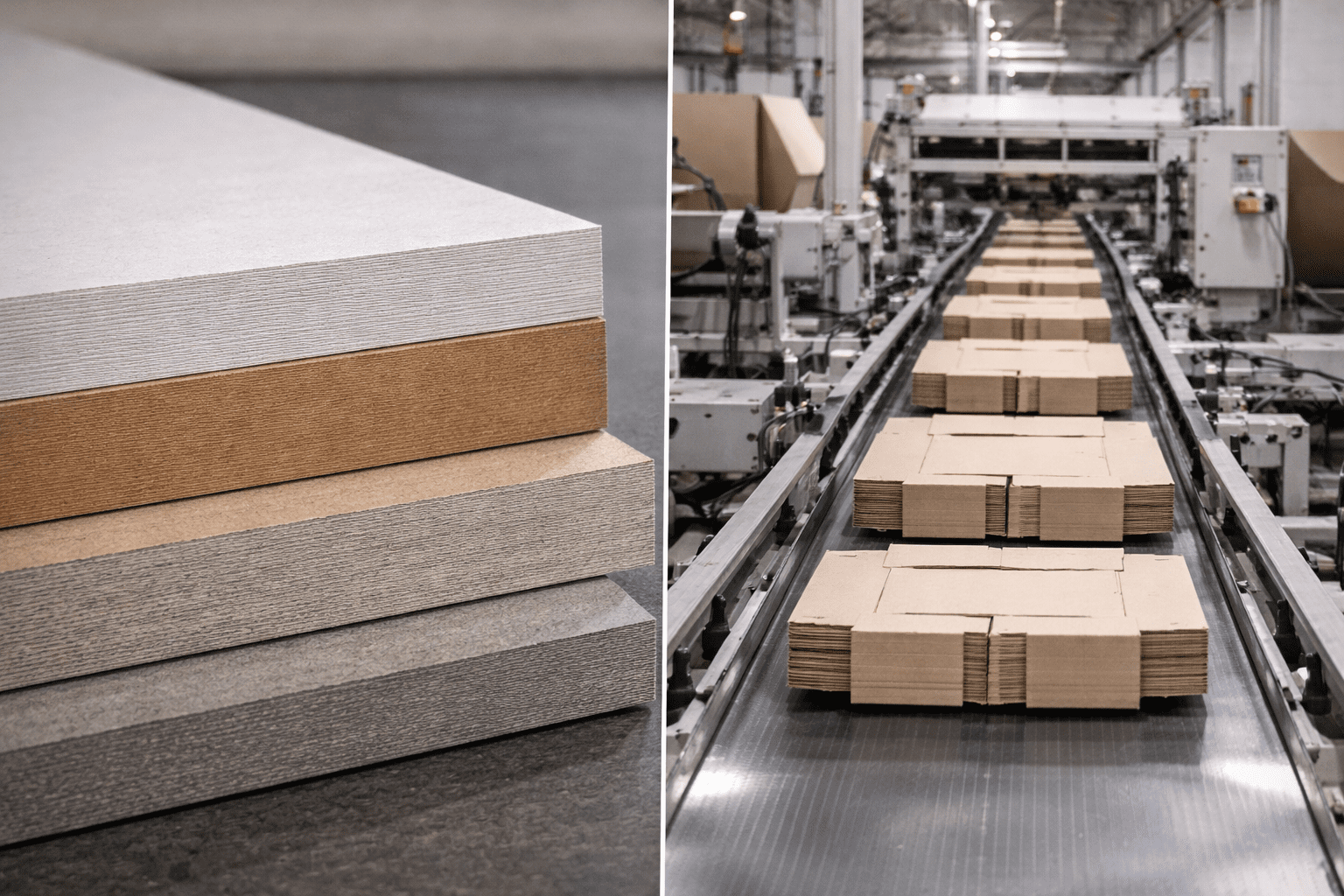
Paperboard selection and production efficiency both play a role in how packaging quotes are built and how cartons perform in real operations